
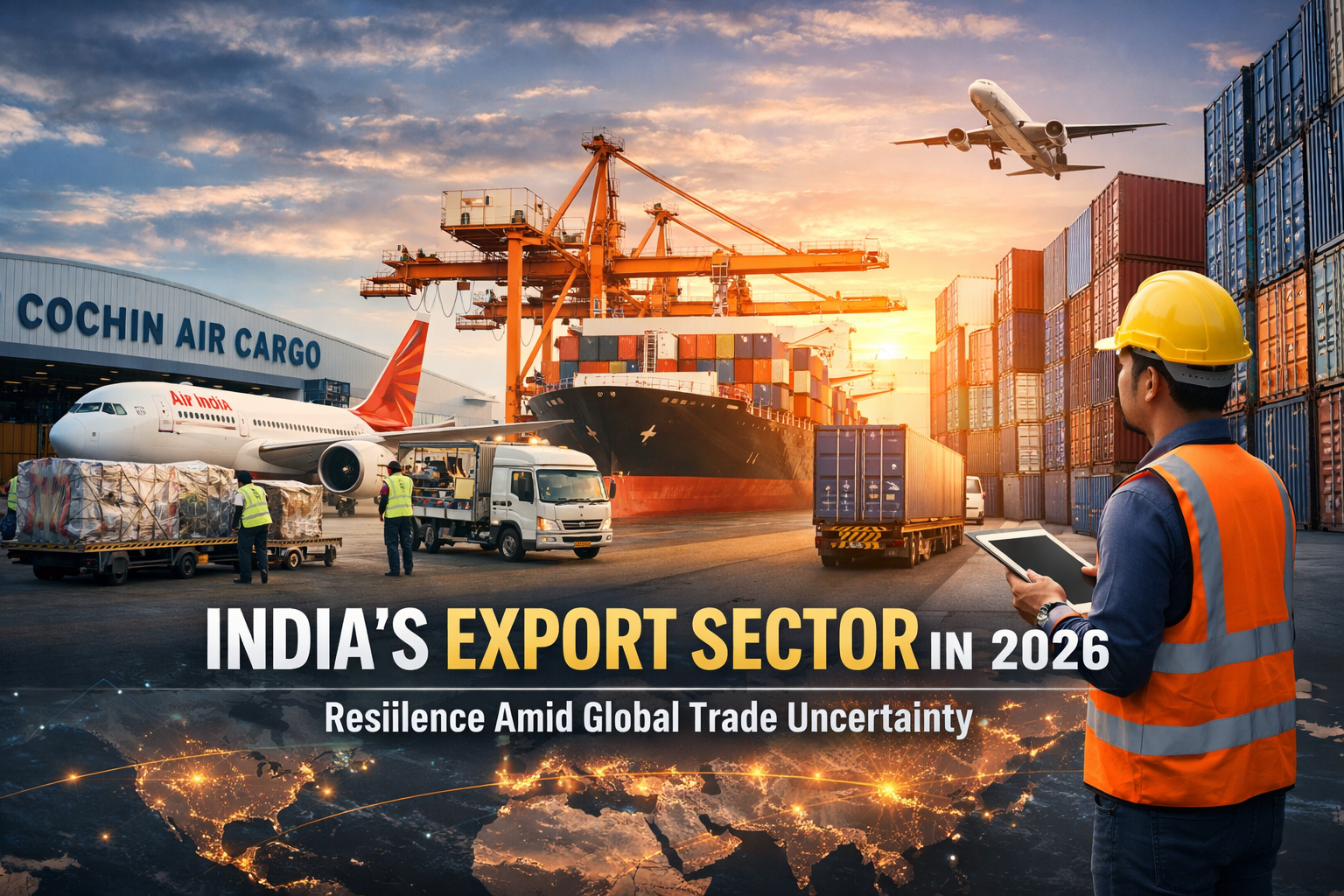
India’s export landscape in early 2026 is shaped by contrasting forces — rising global demand and diplomatic tensions on one hand, and protective trade barriers on the other. While exporters are navigating complex market dynamics, strategic policy efforts and new trade opportunities are keeping India’s export engine running.
One of the most notable developments is the pressure from the United States over trade practices. The U.S. administration has indicated the possibility of raising tariffs further on Indian imports linked to India’s continued purchases of Russian oil, stirring concerns among exporters about market access and competitiveness. The possibility of additional tariffs follows sweeping duties imposed in 2025 that increased some U.S. tariffs on Indian goods up to 50%, raising the pressure on Indian businesses that rely on the U.S. market. Reuters
At the same time, Indian exports have shown resilience despite external headwinds. Total export volumes grew moderately through 2025, supported by diversification across markets and rising shipments of engineering goods, electronics, and pharmaceuticals. Experts note that broadening India’s trade portfolio beyond traditional destinations is helping the sector withstand tariff pressures and global uncertainties. Whalesbook
In a related move aimed at improving regional trade linkages, Coal India Ltd has opened its coal auctions directly to buyers in neighboring countries, including Bangladesh, Nepal, and Bhutan, instead of relying on intermediaries. Although this step is expected to stabilize volumes more than increase total shipments, it reflects a broader government push to integrate export channels with neighboring markets. Reuters
Infrastructure upgrades are also supporting export logistics. Cochin International Airport Ltd has expanded its export cargo handling capacity to 1,25,000 metric tonnes annually, nearly doubling previous capacity. The new facilities include enhanced cold chain support and security infrastructure, helping exporters of perishables, pharmaceuticals, and high-value goods manage global shipments more efficiently. The Times of India
While export challenges remain — including tariff barriers and price competition from other global suppliers — industry stakeholders remain optimistic about growth prospects. Projections for the coming years suggest that exports could continue their upward trajectory, especially with ongoing efforts to forge new trade agreements and enhance manufacturing competitiveness. The Economic Times
Overall, India’s export sector in 2026 is marked by strategic adaptation to global trade pressures, steady diversification, and targeted efforts to strengthen export infrastructure and market outreach — a combination that offers cautious optimism for exporters nationwide.
