
What Is Tutti Frutti?
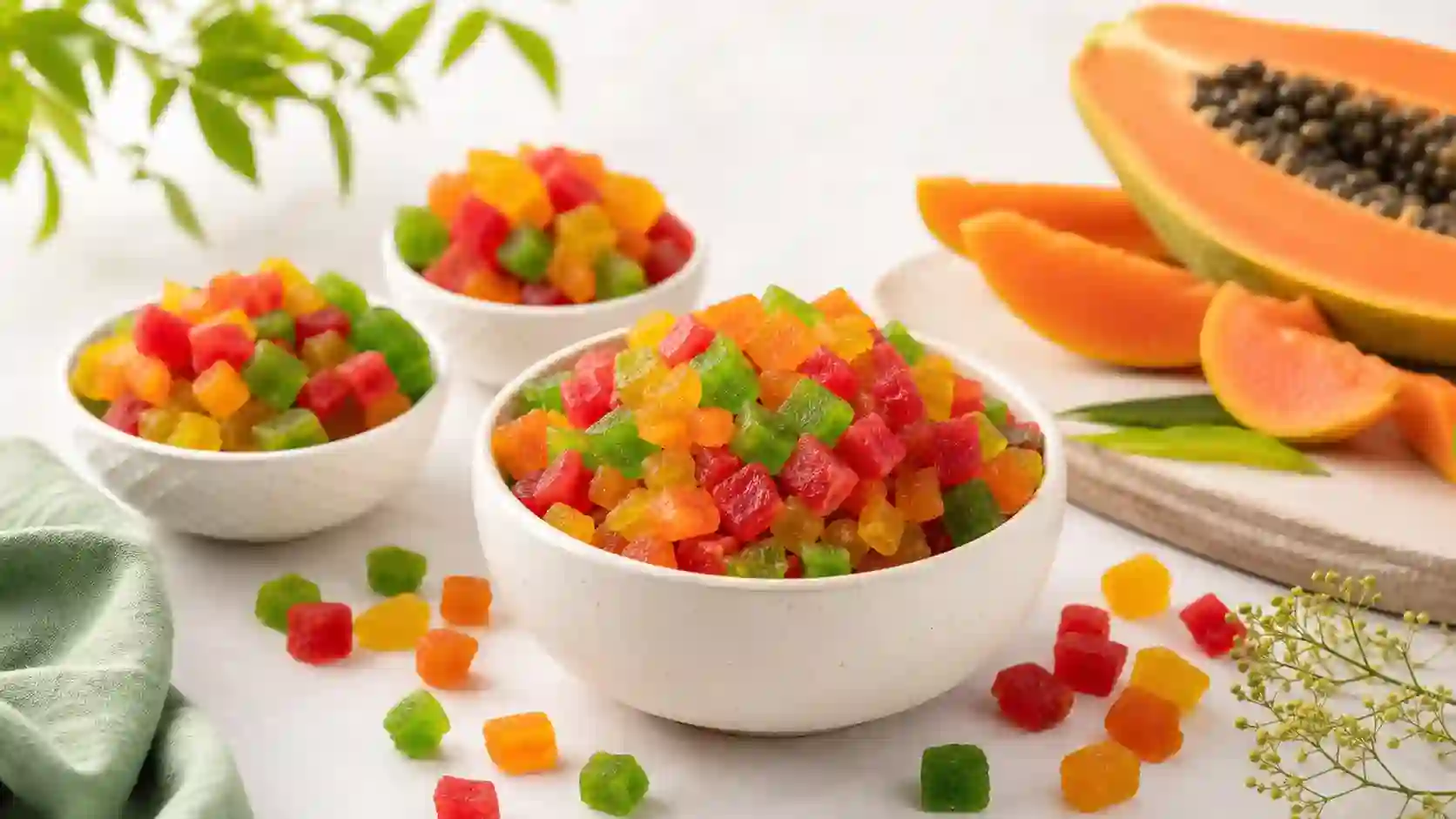
Tutti frutti is a colourful, sweet candied fruit made primarily from raw papaya. These small, vibrant cubes are a staple ingredient in Indian bakeries, ice cream parlours, and sweet shops across the country and beyond.
The name comes from Italian, meaning “all fruits,” though the Indian version is almost exclusively papaya-based. Unlike Western tutti frutti — which often refers to a mixed fruit flavour — Indian tutti frutti is a specific product: papaya preserved in sugar syrup, then dried and coated to create chewy, jewel-toned cubes in red, green, orange, and yellow.
Quick facts
- Base ingredient: Raw, unripe papaya
- Other names: Candied papaya, glazed papaya cubes
- Available colours: Red, green, yellow, orange, mixed
- Typical size: 5–8mm cubes
- Shelf life: 12–18 months, stored properly
- Primary uses: Bakery, ice cream, confectionery, Indian sweets
How Is Tutti Frutti Made?
The production process transforms raw, unripe papaya into the colourful candied cubes you see in cakes, ice cream, and traditional Indian desserts. Here’s the step‑by‑step manufacturing process:
Selection
Firm, unripe papayas are carefully chosen for their dense texture. Ripe papayas are too soft and won’t hold their shape during processing.
Peeling & cubing
Papayas are peeled, deseeded, and cut into uniform cubes — typically 5–8mm for consistent appearance.
Blanching
Cubes are briefly blanched in hot water to soften the texture slightly and prepare them for syrup absorption.
Sugar syrup immersion
Cubes soak in concentrated sugar syrup for 24–48 hours, absorbing sweetness and developing their characteristic chewy texture.
Colouring
Food‑grade colours, natural or synthetic, are added during syrup immersion to create vibrant red, green, yellow, and orange hues.
Drying
Excess syrup is drained and cubes are dried to achieve the optimal moisture level for long shelf life.
Coating
A light sugar or glucose coating is applied to prevent cubes from sticking together during storage and transport.
Quality check & packaging
Final inspection for colour consistency, cube integrity, and moisture content before bulk packaging.
Premium manufacturers like Rajveer Exim maintain strict hygiene standards throughout this process and offer both natural‑colour and conventional options to meet diverse market demands.
Popular Applications
Tutti frutti is remarkably versatile, finding applications across multiple food industries. Here’s where this colourful ingredient appears most often:
Bakery
Fruit cakes, plum cakes, muffins, bread, cookies, buns, pastries, Christmas cakes
Ice cream
Tutti frutti flavour ice cream, mix‑ins, sundae toppings, frozen desserts
Confectionery
Chocolates, candy bars, trail mixes, energy bars, snack mixes
Indian sweets
Paan, kheer, halwa, ladoo, barfi, festive mithai
Beverages
Falooda, milkshakes, lassi, dessert drinks, mocktails
Retail
Packaged snack mixes, home baking kits, ready‑to‑use toppings
Bakeries remain the largest consumers of tutti frutti, particularly during festive seasons like Christmas, Diwali, and wedding seasons when fruit cake and celebration sweet demand surges dramatically.
Natural vs Artificial Colours
Colour is a key purchasing decision for bulk buyers. Understanding the differences helps you choose the right variant for your target market:
| Factor | Natural colours | Artificial colours |
|---|---|---|
| Source | Plant extracts — beetroot, turmeric, spirulina, chlorophyll | Synthetic food dyes, permitted food colours |
| Vibrancy | Softer, pastel tones | Bright, vivid shades |
| Stability | May fade with heat, light, or extended storage | Highly stable across conditions |
| Cost | Higher production cost | More economical |
| Market appeal | Premium brands, health‑conscious consumers | Traditional bakeries, cost‑sensitive markets |
| Export compliance | Easier approval for EU, US, and strict markets | May face restrictions in certain countries |
Rajveer Exim offers both natural and synthetic colour variants, with complete documentation for export compliance to any destination market.
Choosing a Reliable Supplier
When sourcing tutti frutti in bulk quantities, evaluate potential suppliers against these criteria:
- Product consistency
Uniform cube size, colour intensity, and moisture content across batches
- Certifications
FSSAI, ISO, HACCP for domestic markets; additional certifications as required for export destinations
- Customisation capability
Ability to produce specific colours, cube sizes, sugar levels, or formulations
- Shelf‑life guarantee
Minimum 12 months shelf life under proper storage conditions
- Packaging options
Bulk bags, retail‑ready packs, private label, custom branding
- Export experience
Understanding of destination country regulations, documentation, and shipping requirements
Storage Tips for Bulk Buyers
Proper storage protects your investment and ensures product quality until use:
Temperature
Store at 20–25°C in a climate‑controlled environment
Humidity
Maintain humidity below 65% to prevent moisture absorption
Airtight storage
Keep sealed in airtight containers after opening bulk packages
Light protection
Store away from direct sunlight to preserve colour vibrancy
Odour isolation
Keep separate from strong‑smelling products — tutti frutti absorbs odours
FIFO rotation
Follow first‑in, first‑out inventory rotation for freshness
Why Source from Rajveer Exim?
Rajveer Exim is a trusted tutti frutti manufacturer and exporter from India, supplying bakeries, confectioners, and food manufacturers across the globe.
Direct factory pricing
Competitive rates for bulk orders with no middleman markup
Customisable specifications
Custom colours, cube sizes, sugar levels, and packaging options
Export‑ready documentation
Phytosanitary certificates, lab reports, COA, and compliance paperwork
Consistent quality
Strict quality control across large‑volume orders

This content has been reviewed by Chetan Pawar, Export Head at Rajveer Exim, to ensure the accuracy of product information, export packaging, manufacturing standards, food safety practices, and international export procedures.
View full profile →Frequently Asked Questions
What exactly is tutti frutti made from?
Tutti frutti is made from raw, unripe papaya that is processed with sugar syrup and food‑grade colours. The papaya cubes absorb the sugar and colour during a 24–48 hour immersion process, then are dried to create the final chewy, colourful product.
Is tutti frutti vegetarian?
Yes, tutti frutti is 100% vegetarian. It contains only papaya, sugar, permitted food colours, and approved preservatives. Buyers with specific dietary requirements should still verify ingredients for allergen and additive concerns.
What is the shelf life?
Properly manufactured and stored tutti frutti has a shelf life of 12–18 months. Storage in a cool, dry environment away from direct sunlight ensures maximum longevity.
How is it different from Western tutti frutti?
Indian tutti frutti is a specific candied papaya product with distinct colours and chewy texture. Western “tutti frutti” typically refers to a mixed fruit flavour, often artificial, used in ice creams and candies.
What cube sizes are available for bulk orders?
Standard cubes are 5–8mm. Rajveer Exim can produce custom sizes based on buyer specifications for large bulk orders.
Can it withstand baking temperatures?
Yes. The candied cubes maintain their shape and colour in cakes, muffins, and other baked goods, though some slight colour softening may occur at very high temperatures.
Do you supply natural colour tutti frutti?
Yes. Rajveer Exim manufactures both natural and synthetic colour tutti frutti. Natural variants use plant‑based extracts like beetroot, turmeric, and chlorophyll for premium and health‑conscious markets.
What documentation is provided for export orders?
Complete export documentation including Certificate of Analysis, phytosanitary certificates, lab test reports, FSSAI compliance, packing lists, and destination‑specific certificates.
What’s the minimum order quantity?
MOQs vary based on product specifications and destination. Contact Rajveer Exim with your requirements — we work with importers, distributors, bakeries, and food manufacturers of various scales.
Looking for a reliable tutti frutti manufacturer in India?
Get export‑quality tutti frutti directly from Rajveer Exim for bakeries, importers, distributors, ice cream manufacturers, and food brands worldwide.